Which Climate Controller Is Best for Your Poultry House?
Climate control inside poultry houses is one of the most important factors directly affecting poultry health, animal welfare, and growth performance. Whether you operate a broiler farm, a layer farm, or a large-scale commercial poultry facility, maintaining appropriate temperature, humidity, and air quality throughout the production cycle plays a vital role in reducing heat stress and creating an optimal environment for poultry production.
Today, modern poultry houses increasingly rely on Automatic Climate Control Systems to manage various equipment and systems within the facility. These technologies allow ventilation, cooling, heating, and other essential equipment to operate in coordination with actual environmental conditions, reducing the need for constant manual adjustments.
However, every poultry house has different dimensions, building structures, flock sizes, and equipment configurations. Therefore, selecting the right climate controller should not be based on price alone. Instead, it is important to choose a system that matches the equipment you need to manage and the specific operational requirements of your farm.
Temp Climate Controller offers a range of climate controllers designed for livestock and poultry housing, with solutions to meet different operational requirements. From basic control systems to more advanced environmental management solutions, our product range helps farm operators find the right climate control system to suit their poultry house and support efficient farm management.
1. Why Do Poultry Houses Need a Climate Control System?
Poultry are highly sensitive to changes in temperature and environmental conditions, particularly in closed-house systems equipped with evaporative cooling systems. These facilities rely on the coordinated operation of fans, ventilation systems, cooling equipment, and various monitoring devices to maintain suitable environmental conditions inside the poultry house.
When the temperature inside a poultry house becomes too high, birds may experience heat stress, which can negatively affect feed intake, growth performance, and overall production efficiency. On the other hand, excessively low temperatures, especially during the early brooding period, may force young chicks to use more energy to maintain their body temperature.
In addition to temperature, humidity and air quality are equally important factors that should not be overlooked. Moisture can accumulate inside poultry houses through bird respiration, manure, spilled drinking water, and other daily activities. Excessive moisture can affect litter quality and contribute to ammonia gas formation, potentially compromising the birds’ living environment.
An effective climate control system helps poultry farmers manage these essential environmental factors in a systematic and efficient manner, including:
Temperature Control: Maintains suitable temperatures according to poultry species and age to support healthy growth and development.
Humidity Control: Helps reduce excessive moisture inside the poultry house and maintain proper litter conditions.
Ventilation Management: Introduces fresh air into the poultry house while removing excess heat, moisture, and accumulated gases.
Cooling System Management: Controls ventilation fans and water pumps in the Cooling Pad system according to predefined operating conditions.
Heating System Control: Maintains appropriate temperatures during cold weather and throughout the chick brooding period.
Air Quality Monitoring: Supports the installation of gas monitoring sensors, such as carbon dioxide (CO₂) and ammonia (NH₃) sensors, in compatible controller models or systems.
Properly managing these environmental factors helps maintain more consistent conditions inside the poultry house and reduces the risks associated with environmental fluctuations that may negatively affect poultry production.
2. Key Systems to Consider Before Choosing a Climate Controller
Before selecting a climate controller for your poultry house, it is important to assess the equipment and systems currently installed on your farm. This will help you choose a controller with the appropriate number of output channels and the necessary functions to meet your operational requirements.
2.1 Ventilation System
The ventilation system is one of the most essential components of poultry house management. Its primary function is to bring fresh air into the facility while removing excess heat, moisture, dust, and gases generated by poultry farming activities.
In general, closed-house systems use exhaust fans as the main equipment for controlling air circulation. Their operation must be adjusted according to temperature, flock size, and the environmental conditions inside the poultry house.
A climate controller can automatically operate the fans based on predefined settings. For example, when the temperature rises above a specified level, the system can activate additional fans to increase the ventilation rate. When the temperature decreases, the controller adjusts fan operation according to the programmed conditions.
Proper ventilation management helps prevent the accumulation of harmful gases and excessive moisture while maintaining effective air circulation throughout the poultry house.
2.2 Cooling System
For poultry houses in Thailand, where high temperatures are common, a cooling system is an essential component in reducing the impact of external heat on poultry production.
An evaporative cooling system, commonly known as a Cooling Pad system, uses the principle of water evaporation to lower the temperature of incoming air before it enters the poultry house. The system operates through the combined functions of cooling pads, ventilation fans, and water pumps.
A climate controller can regulate the operation of water pumps and ventilation fans based on measured temperature levels, allowing the cooling system to respond to the actual environmental requirements of the poultry house.
When ventilation and cooling systems operate together effectively, they can improve heat management inside the facility. However, selecting and configuring a cooling system also requires consideration of outdoor relative humidity and poultry house design, as evaporative cooling performance depends on ambient temperature and humidity conditions.
2.3 Heating System
During the chick brooding period or when outdoor temperatures decrease, maintaining an appropriate temperature inside the poultry house is particularly important. Young chicks have a less developed ability to regulate their body temperature compared with mature birds.
A heating system therefore plays an important role in maintaining temperatures suitable for the birds’ age and development stage. Depending on the farming operation, heating equipment such as heaters or brooders may be used.
Climate controllers equipped with heating functions can automatically switch heating equipment on or off according to measured temperature levels, reducing the need for constant manual adjustments.
Most importantly, temperature settings should be adjusted according to the birds’ age, flock size, and poultry house characteristics to prevent excessively hot or cold conditions.
2.4 Lighting Control System
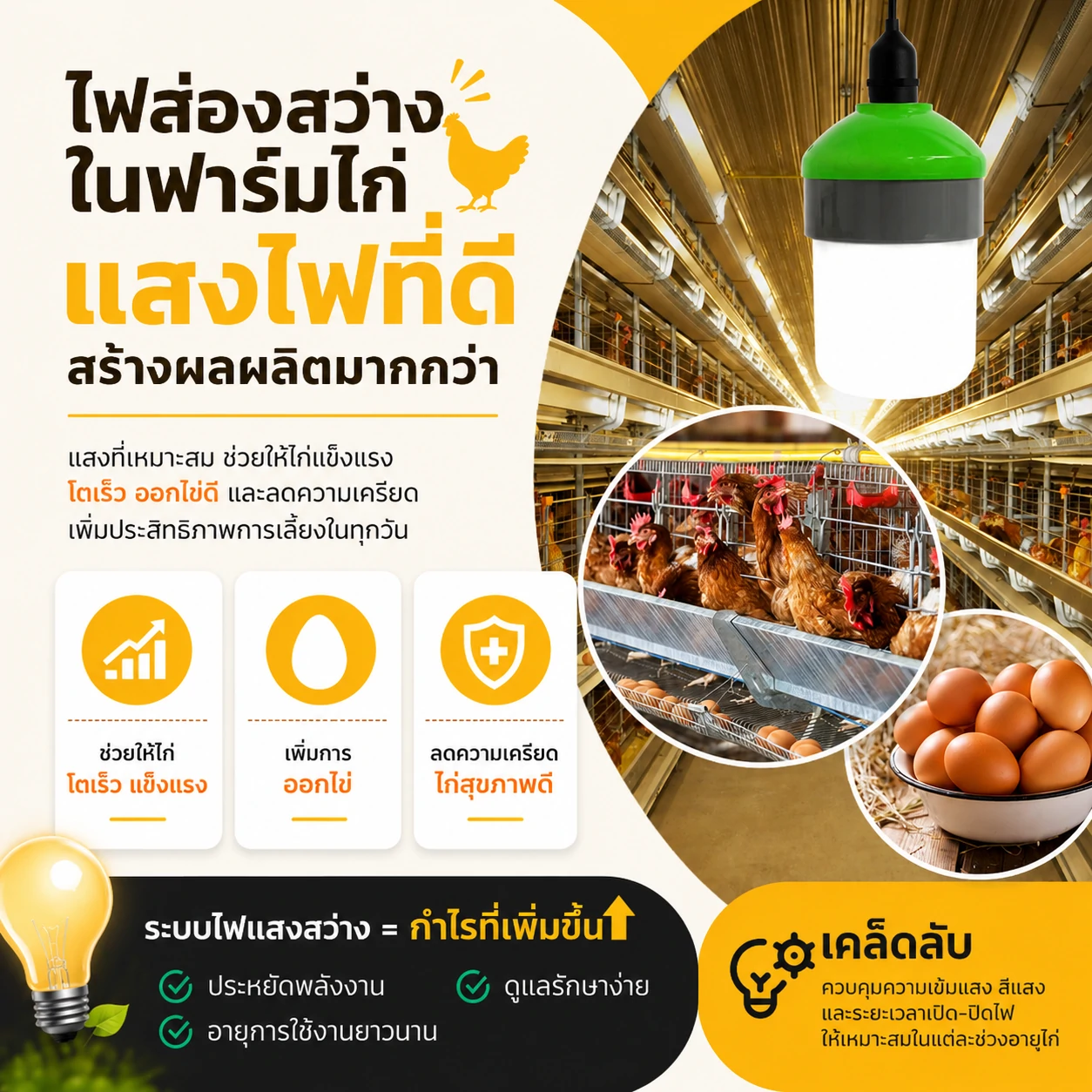
Lighting plays an important role in poultry behavior, feed intake, rest patterns, and biological cycles. This is particularly important for farms that follow specific lighting programs according to the birds’ age or production objectives.
Some climate controller models allow users to program automatic lighting schedules, making it easier to manage lighting periods systematically while reducing errors associated with manual switching.
Lighting programs should always be designed according to the type of poultry and the farm’s management practices. A single lighting schedule should not be applied universally to all poultry operations without considering their specific requirements.
2.5 Temperature & Humidity Monitoring
Effective environmental control requires accurate data from sensors installed inside the poultry house. These sensors provide the information needed by the climate controller to evaluate environmental conditions and operate connected equipment accordingly.
Temperature sensors measure heat levels inside the poultry house, while humidity sensors monitor the amount of moisture in the air. Both measurements are essential for managing ventilation and cooling systems effectively.
Proper sensor placement and regular accuracy checks help ensure that the information used by the climate control system remains reliable and suitable for operational decision-making.
2.6 Air Quality & Gas Monitoring
Various gases that may affect poultry health can accumulate inside poultry houses. These include ammonia (NH₃), which is generated through the decomposition of waste and poultry manure, as well as carbon dioxide (CO₂), which is produced through bird respiration and combustion from certain heating equipment.
If ventilation is insufficient, these gases may accumulate to levels that negatively affect the respiratory health and overall welfare of poultry.
Choosing a climate controller that supports gas monitoring sensors is another option for farms looking to improve air quality management. Sensor data can be used to support operational decisions and help adjust ventilation systems according to actual environmental conditions.
3. Which Temp Climate Controller Models Are Available?
Temp Climate Controller offers several product series designed to meet different climate control requirements for livestock and poultry houses. When selecting a model, it is important to consider the number of devices that need to be controlled, the required functions, and the system’s ability to accommodate future expansion.
3.1 TP Series Basic Climate Control for Simple and Cost-Effective Operations
The TP Series is a panel-type climate controller designed for basic applications. It features a straightforward operating interface and is suitable for farm operators who want to introduce automated climate control without requiring highly complex functions.
Key Features of the TP Series
Supports control of 2–13 outputs, depending on the model.
Includes built-in Minimum Ventilation Control.
Supports control of poultry house equipment according to the functions available in each model.
Optional alarm systems are available.
Supports SMS notifications and remote connectivity through TempView, subject to compatible accessories and configurations.
Ideal for: Poultry houses requiring basic climate control, facilities with relatively simple equipment configurations, or farms looking to manage their investment costs while maintaining systematic ventilation management.
3.2 Temp Series Advanced Climate Control for More Precise Management
The Temp Series is one of the original product lines from Temp Climate Controller, with more than 20 years of continuous development. It is designed for poultry houses that require multiple systems to be controlled simultaneously, offering flexibility in configuring equipment operation according to specific livestock management requirements.
This series supports 8–17 outputs and features Smart Duration Control (SDC) technology, which helps manage equipment operating durations and operating patterns according to predefined programming conditions.
Key Features of the Temp Series
Supports control of 8–17 outputs.
Controls ventilation fans.
Supports cooling system water pump control.
Supports heating program control.
Controls lighting programs.
Supports an alarm system.
Supports 2–3 temperature sensor points and 1 humidity sensor point, depending on the configuration.
Optional water consumption, carbon dioxide, and ammonia sensors are available.
Stores up to 1,000 event records.
Optional SMS notification and TempView connectivity are available for remote monitoring.
Ideal for: Broiler farms, layer farms, and livestock facilities that require multiple environmental control functions in one system, particularly poultry houses that need coordinated management of ventilation fans, cooling systems, heating systems, and lighting.
3.3 R-Tron Series A Flexible Solution for Advanced Poultry House Climate Control
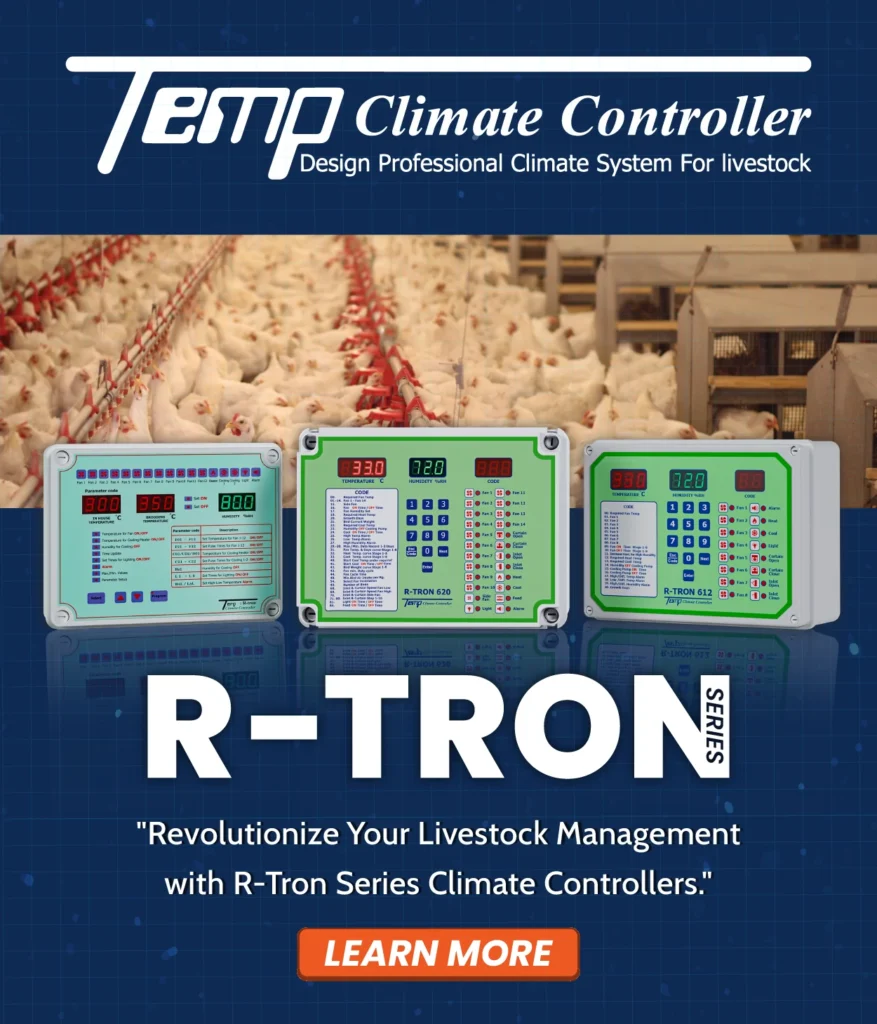
R-Tron Series – A Flexible Solution for Advanced Poultry House Climate Control
The R-Tron Series is designed for livestock housing that requires advanced control functions. It combines cost-effectiveness with the capability to manage multiple equipment systems within a single controller.
It supports 7–20 outputs, features Smart Duration Control (SDC) technology, and comes with built-in Minimum Ventilation Control.
Key Features of the R-Tron Series
Supports control of 7–20 outputs.
Supports ventilation fan control.
Controls cooling system water pumps.
Supports heating system programs.
Supports lighting control.
Built-in Minimum Ventilation Control.
Supports 1–4 temperature sensor points and 1 humidity sensor point, depending on the supported configuration.
Optional sensors for water consumption, carbon dioxide (CO₂), and ammonia (NH₃).
Stores up to 1,000 event records.
Supports alarm notifications and remote connectivity through compatible devices or optional systems.
Ideal for: Poultry houses that require control of multiple devices, have diverse climate management requirements, or need flexible programming to suit the specific environmental conditions of each farm.
4. Comparison of Temp Climate Controller Series
To better understand the differences between each series, the main features can be compared as follows:
Features | TP Series | Temp Series | R-Tron Series |
|---|---|---|---|
Number of Outputs | 2–13 | 8–17 | 7–20 |
Minimum Ventilation | Available | Depends on model and configuration | Available |
Smart Duration Control (SDC) | Model-dependent | Available | Available |
Fan Control | Model-dependent | Supported | Supported |
Cooling Pump Control | Model-dependent | Supported | Supported |
Heating System | Model-dependent | Supported | Supported |
Lighting Control | Model-dependent | Supported | Supported |
Temperature Sensors | Model-dependent | 2–3 points | 1–4 points |
Humidity Sensor | Model-dependent | 1 point | 1 point |
Event Data Logging | Model-dependent | Up to 1,000 records | Up to 1,000 records |
Alarm Notifications | Optional accessories | Optional accessories | Optional accessories |
Note: Features and the number of output channels may vary depending on the specific model, configuration, and selected accessories. Please check the technical specifications with the supplier before making a purchase.
5. Key Factors to Consider When Choosing the Right Climate Controller for Your Farm
Although each controller series offers different capabilities, choosing the most suitable model should be based on the actual operating requirements of your poultry house, rather than simply selecting the controller with the greatest number of functions.
The following factors should be considered:
5.1 Poultry House Size and Layout
Each poultry house has a different floor area and structural design. A small poultry house with only a few fans and equipment units may require a relatively simple control system. In contrast, a large facility or a closed-house poultry system may need to manage multiple ventilation fans, water pumps, heating systems, and sensors installed at different locations.
Therefore, it is important to assess the number of devices and required output channels before selecting a climate controller.
5.2 Number of Devices to Be Controlled
Prepare a complete list of all equipment installed inside the poultry house, such as:
Number of ventilation fans
Number of Cooling Pad water pumps
Number of heating units
Number of lighting sets
Number of temperature and humidity sensors
Alarm systems and optional accessories
This information helps ensure that the selected controller has sufficient output channels to support all required equipment and prevents compatibility issues caused by choosing a controller with insufficient capacity.
5.3 Environmental Monitoring Requirements
If a farm only needs to monitor temperature and control ventilation fans, a controller with extensive environmental monitoring functions may not be necessary.
However, farms that require more detailed environmental management should consider controllers that support multiple types of sensors, such as temperature, humidity, carbon dioxide (CO₂), and ammonia (NH₃) sensors. These measurements provide a more comprehensive overview of environmental conditions inside the poultry house and help support better management decisions.
5.4 Future System Expansion
When investing in a climate control system, it is important to consider potential future expansion, such as increasing poultry house capacity or installing additional equipment. Examples include adding more ventilation fans, expanding the cooling system, or installing additional environmental monitoring points.
Choosing a controller with sufficient output channels and expansion capabilities can provide greater flexibility for long-term system planning and farm development.
5.5 Alarm Notifications and Remote Monitoring
Alarm notifications are another important feature in farm management, particularly for poultry houses that operate continuously, 24 hours a day.
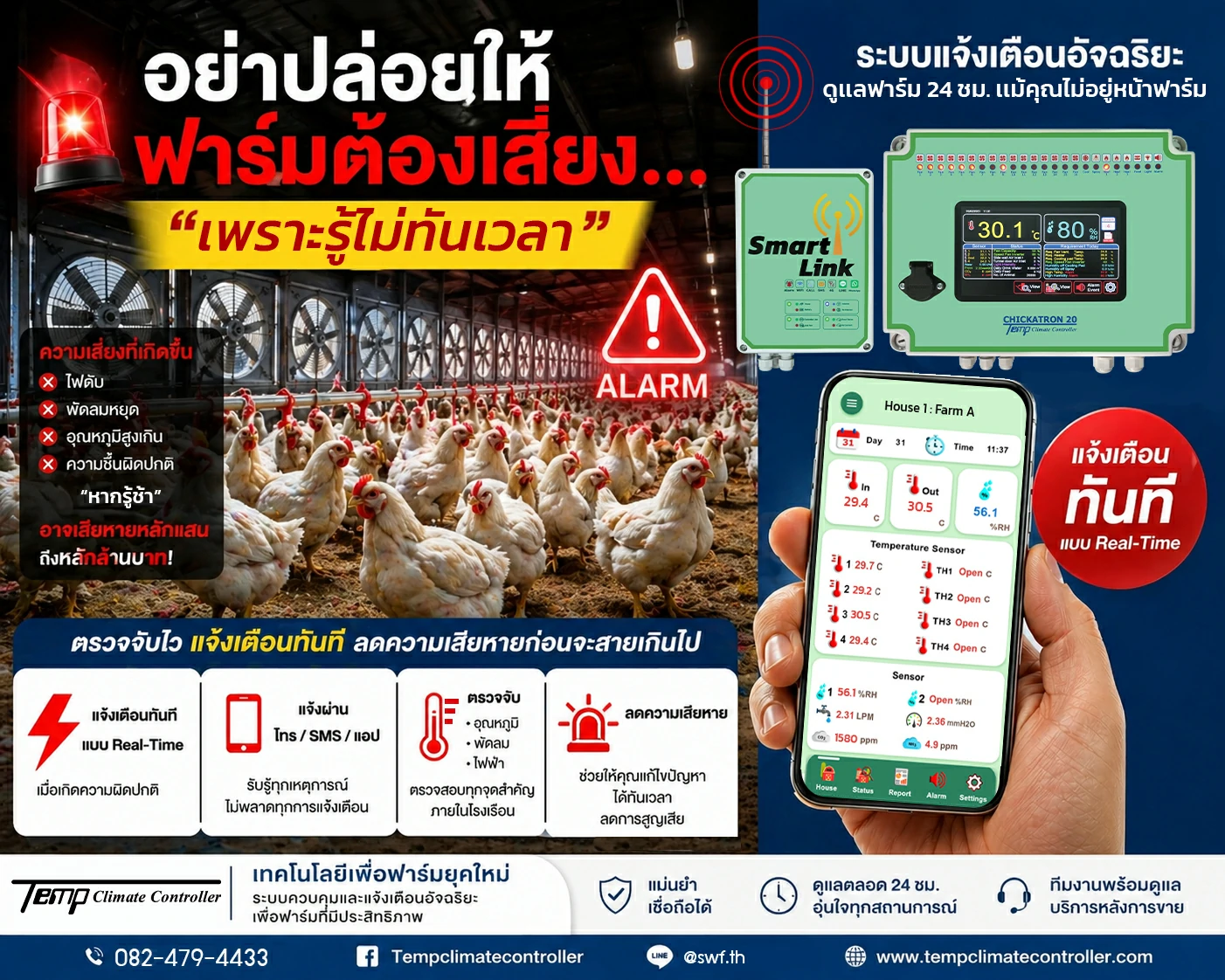
If an abnormal condition occurs, such as the temperature exceeding a predefined limit or a connected system malfunctioning, an appropriate alarm system can help notify farm operators so they can investigate the situation and take corrective action more quickly.
Temp Climate Controller offers options for connecting alarm notification systems and the TempView platform, depending on the capabilities of each model and the compatible accessories installed.
6. TempView Technology for Remote Poultry House Monitoring and Management
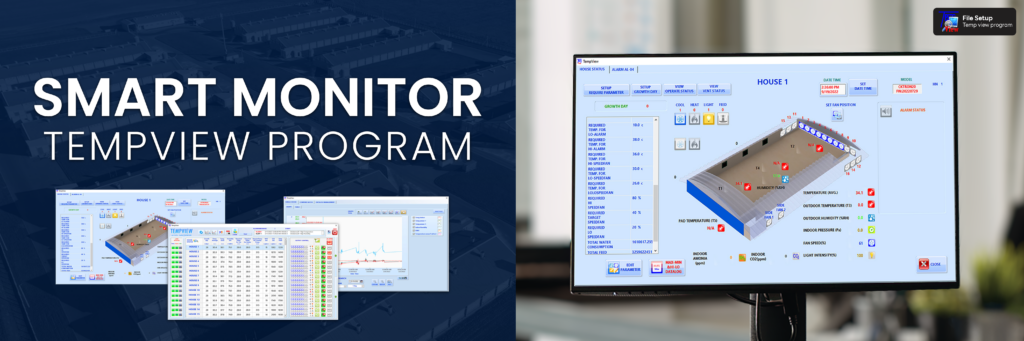
In addition to having a climate controller, monitoring the operating status of equipment inside the poultry house is equally important. Some problems may occur when farm personnel are not physically present at the facility, making remote monitoring an essential part of modern farm management.
TempView is a remote monitoring and management platform that connects users to data and operational information from their poultry houses. It is designed to work with compatible climate controllers.
The benefits of remote connectivity include:
1. Monitor System Operating Status
Allows farm operators to monitor data and the operating status of connected systems without having to physically enter the poultry house every time an inspection is required.
2. Receive Notifications of Abnormal Events
When used with a compatible alarm system, operators can receive notifications through designated channels, such as SMS, enabling them to become aware of abnormal conditions and investigate them more quickly.
3. Improve Farm Management Convenience
Remote access to operational data makes it easier for farm owners and operators to monitor poultry house performance and use the available information to support farm management and planning decisions.
4. Overcome Monitoring Limitations Across Multiple Locations
Particularly suitable for farm operators managing multiple poultry houses or large-scale facilities who need to monitor different systems from a central location.
The available remote monitoring and control functions depend on the climate controller model, connectivity devices, and the service configuration installed.
7. How Can a Climate Control System Improve Farm Management Efficiency?
Installing a climate controller is not simply about automatically switching equipment on and off. It also helps improve poultry house management by making daily operations more systematic and efficient.
Reduce the Need for Manual Operation
Automation allows equipment to operate according to predefined settings and programmed conditions. This reduces the need for farm operators to manually adjust ventilation fans, water pumps, or heating systems throughout the day.
Maintain More Consistent Environmental Conditions
The integration of sensors and climate controllers allows equipment operation to be adjusted systematically in response to changing environmental conditions inside the poultry house.
Help Reduce Risks Associated with Environmental Fluctuations
Continuous monitoring and control provide farm operators with useful information to assess conditions and adjust equipment operation accordingly. This is particularly important when outdoor weather conditions change rapidly.
Support Poultry Health and Welfare Management
Proper control of temperature, humidity, and ventilation is an important part of maintaining a suitable environment for poultry. It helps reduce environmental risk factors that may contribute to respiratory problems and heat stress.
Improve Operating Cost Management
Programming equipment to operate according to actual requirements may help reduce unnecessary operation of ventilation fans, water pumps, and other equipment. This can support better energy management and lower operating costs over the long term. Actual results depend on the system design and configuration of each farm.
8. Frequently Asked Questions About Climate Controllers for Poultry Houses
Q: Is a climate controller necessary for a poultry house?
A: A climate controller is highly beneficial for poultry houses equipped with automated ventilation and cooling systems. It manages connected equipment based on sensor data, reduces the need for manual adjustments, and helps maintain environmental conditions suitable for poultry production.
Q: Which climate controller is suitable for a closed-house poultry system?
A: The selection should be based on the number of ventilation fans, Cooling Pad systems, heating equipment, and sensors required. For poultry houses with multiple systems that need to be controlled, the Temp Series or R-Tron Series may be suitable options. However, the number of outputs and functions of each specific model should be checked to ensure they meet actual operating requirements.
Q: Can a climate controller operate ventilation fans and a Cooling Pad system simultaneously?
A: Compatible controller series can manage ventilation fans and cooling system water pumps according to predefined operating conditions. Programming should take into account temperature, humidity, and the ventilation design of the poultry house.
Q: Can the system monitor humidity and ammonia gas levels inside the poultry house?
A: Additional humidity and gas sensors can be selected for compatible controller models. It is important to verify sensor types and connection requirements to ensure compatibility with the selected climate controller.
Q: How can I monitor my poultry house remotely?
A: You can use the TempView platform together with a compatible climate controller and the required connectivity devices. This allows you to monitor system data and receive remote notifications according to the functions supported by the installed system.
Q: Can a climate controller be installed in an existing poultry house?
A: Additional installation may be possible, depending on the existing system. Before installation, the electrical system, existing equipment, available output channels, and device connectivity requirements should be assessed to ensure that the new controller can operate properly with the existing setup.
9. Choose the Right Temp Climate Controller for Your Poultry House
Choosing the right climate controller is an important step in improving poultry house efficiency. Every farm has different limitations and operational requirements, including poultry house size, flock capacity, ventilation systems, cooling equipment, and the level of environmental control needed.
Whether you are looking for a basic control system for a small poultry house or a comprehensive environmental management solution for a large-scale commercial facility, Temp Climate Controller offers several product series to suit different applications and operational requirements.
Our team is ready to provide guidance and help you select the climate controller that best matches your existing systems and farm requirements. We aim to help you make the right investment in farm technology, supporting both your current operations and future farm development.
Contact Us for Product Information and Professional Consultation